
Stay safe and well
Dementia and delirium
Delirium can occur when people are unwell due to a physical illness such as infection or constipation, or due to a change in their medications. Anyone can experience delirium when they are ill, but it is more common in people with dementia. It is important to know how to recognise delirium so that you can seek medical help and be treated for whatever is making you ill.
On this page we:
- hear from a researcher working to improve the experience of dementia and delirium
- tell you how to spot the signs of delirium
- offer some top tips for managing delirium
- link you to further resources
Understanding dementia and delirium
Our Research and Translation Manager, Catherine, spoke to Professor Louise Allan to understand what delirium is and how it affects people with dementia:
Click on the image below to watch the video. It is 7 minutes long.
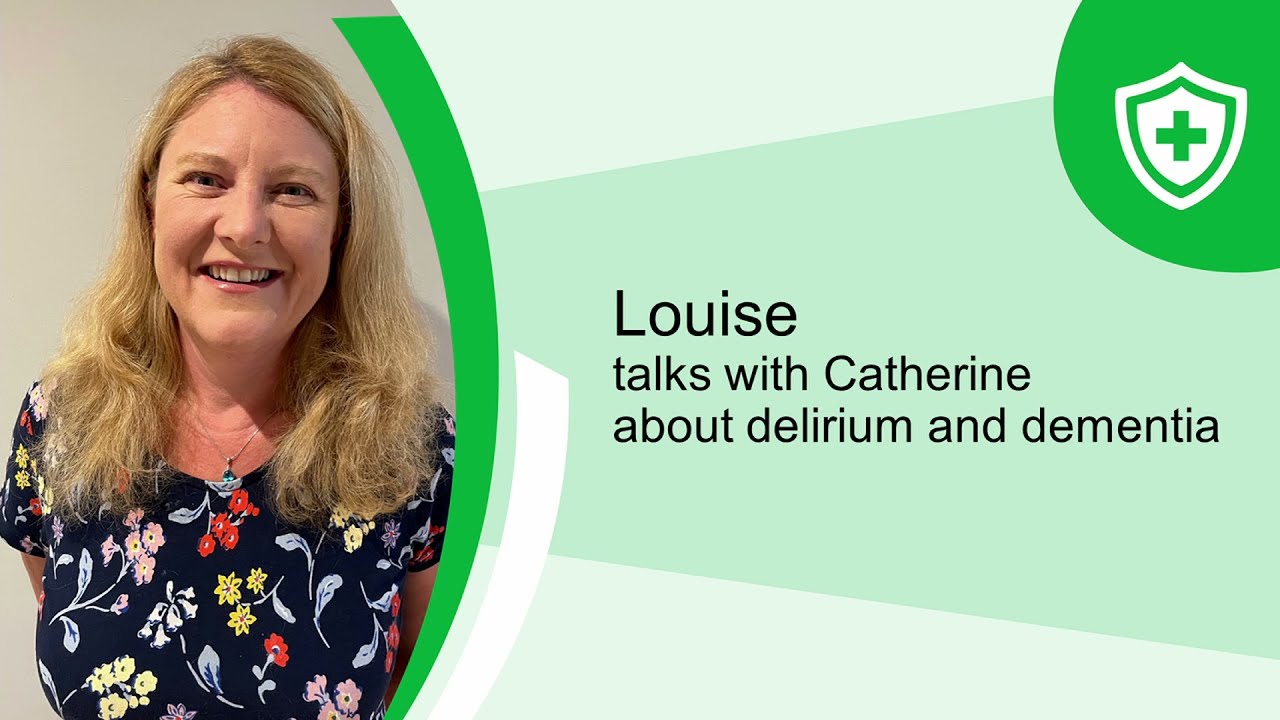
Louise is running a large research study into improving the care people with dementia receive after they have had delirium so that they can make a better recovery.
Louise mentioned John’s Campaign, a campaign to allow carers the right to stay with people with dementia.
The signs of delirium
It is important to know the signs of delirium and how these differ from dementia symptoms:
- sudden, rapid changes in confusion or mood
- being a lot less alert or a lot more agitated than usual
- these changes can fluctuate, so someone could seem very up and down in their health from one moment to the next
It may help to think of these changes using the three characteristics below to spot delirium:
behaviour change – speed of change – irregular change
Delirium can be treated by addressing the medical problem(s) that have caused it. Don’t assume that a change is due to dementia: seek medical help.
Top tips for managing delirium
- drink plenty of water and eat regularly
- keep a good bedtime routine so you don’t disturb your sleep patterns
- make sure you have your glasses and hearing aid (or whatever you need) so that you can see and hear well
- if you are a carer or friend, reassure the person with delirium that you are there to help and remind them of where they are
Further resources
Alzheimer’s Society have a page dedicated to understanding delirium and dementia.
Click here to visit Alzheimer’s Society.
If you would like to watch a ‘Patient Delirium Experience’ video, where a man talks about his own experience of delirium and recovery, then visit the European Delirium Association.
How could we improve this page? Visit the Contact us page to let us know.
Dementia and delirium
You can print a paper version of this resource by clicking the button below.
